
 Afsha
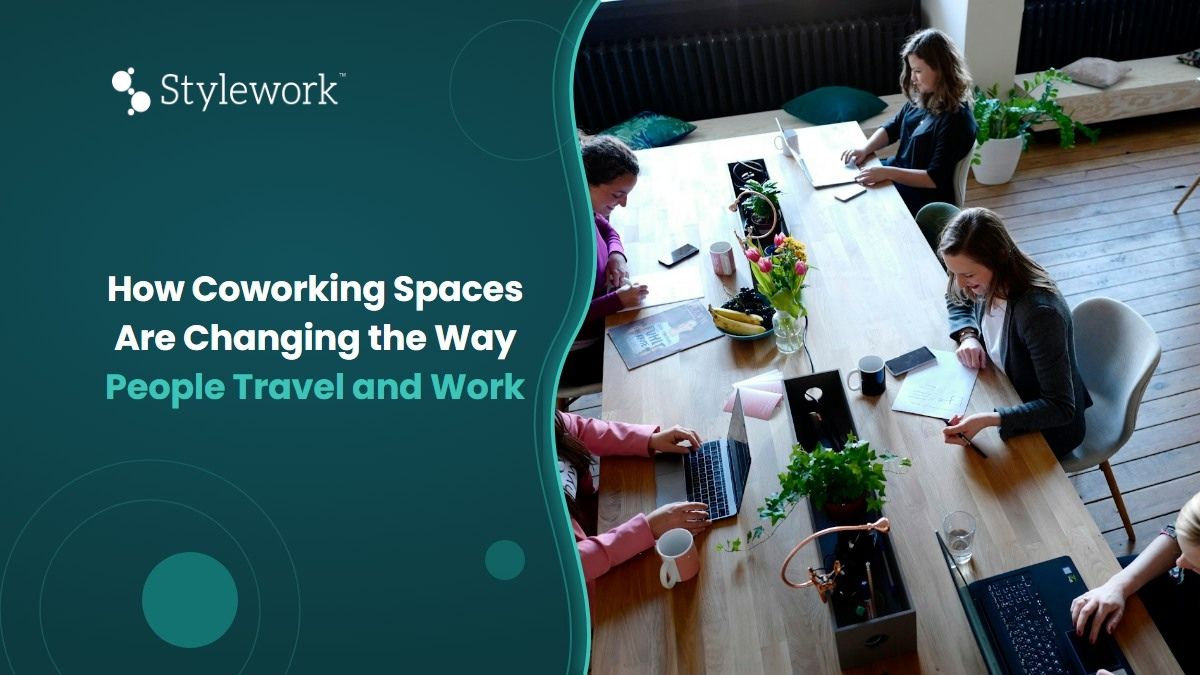
Working from a new city used to sound like a dream only a few people could try. Today, many of us can do it. If your job allows remote or hybrid work, you can spend a few weeks in another city, or even another country, and still get your work done. Coworking spaces for travellers make that much easier.
Of course, it isn’t always smooth. Hotel rooms aren’t great for long workdays, cafés can get noisy, and slow Wi-Fi can ruin an important call. A coworking space solves most of these problems. In this guide, we’ll explain what a workation is, how coworking plans work, and which spaces you can look at in Indonesia, Thailand and a few other popular places.
What is a Workcation, and Why is It Growing?
A workcation is a trip where you work remotely and enjoy the destination in your free time. It’s different from a holiday because you still work, and different from a business trip, which is usually planned around a work task.
More people are doing this every year. Around 60% of Indian knowledge workers follow a hybrid work pattern, and an Accenture study found that 83% of employees think hybrid is the best way to work. Countries like Portugal, Spain, Thailand and Indonesia now have visa options for remote workers too. There are even organised programmes. Remote Year, which Coworking Mag writes about, takes people through 12 cities for about $2,000 a month plus a $3,000 entry fee.
Still, a nice view isn’t enough. To enjoy a workcation, you need a good place to work, internet you can trust, and a daily routine that lets you finish your tasks and still have time to explore.
Why Coworking Spaces Work So Well for Travellers
The hardest part of working while travelling is finding a good place to sit and work. Coworking spaces help in a few simple ways.
A Dedicated Place to Work
A hotel bed or a small table is fine for an hour, but not for a full workday. A coworking space gives you a proper desk, a comfortable chair and fast Wi-Fi. If you’re wondering about coffee shops vs coworking spaces, the difference is simple: cafés are good for quick tasks, and coworking spaces are better for long days.
Better Support for Online Meetings
Your meetings don’t stop just because you’re travelling. Many coworking spaces have meeting rooms, phone booths and quiet corners. If you have confidential or frequent calls, check these facilities before you book.
A Chance to Meet Other Professionals
Working alone while travelling can feel lonely, especially for freelancers. In a coworking space, you meet people from different industries and countries, and a simple chat can lead to a new friend or even a client. It depends on the community, so look for spaces that organise events or have a shared lounge.
Plans That Match Your Stay
You don’t need a long lease for a short stay, so most coworking spaces offer flexible plans. The names change from one space to another, but these are the most common ones:
| Plan type | Best for | What to check |
| Day pass | A short visit, or one big workday | Opening hours, whether meeting rooms cost extra |
| Weekly pass | A stay of about a week | Whether it is calendar days or working days |
| Monthly plan (flexible or fixed desk) | Stays of several weeks | Cancellation terms and whether the desk is fixed |
| Multi-location membership | Moving between cities | Which locations are included |
How do you choose between a coworking day pass vs monthly membership? Think about how many days you’ll really work from the space. If it’s fewer than 10 days a month, a day pass is usually the more cost-effective option. If you’re moving between cities, a multi-location membership can cover all of them, and day passes for travellers work well for stays of a week or less.
Best Coworking Spaces in Indonesia: Bali and Jakarta
Indonesia is one of the most popular places for remote workers, mainly because of Bali. It also has a visa option for remote workers, which we explain later in this guide. Here are the main places to consider.
Coworking Spaces in Bali: Canggu and Ubud
Bali has plenty of coworking spaces because so many remote workers visit. Canggu is lively, with cafes and surf spots all around, while Ubud is calmer and surrounded by rice fields.
- Dojo Bali (Canggu) is one of the best-known coworking spaces for digital nomads in Bali. It has a strong community and regular events.
- Outpost (Canggu and Ubud) has spaces in both areas, so you can change location without changing provider.
- Tropical Nomad (Canggu) has been popular for years with freelancers and online business owners.
- BWork (Canggu and Seminyak) is a good choice if you prefer an office-style setting.
These spaces usually offer day passes, weekly passes and monthly plans, and some also have private desks or meeting rooms. Traffic in Canggu can be slow, so choose a space close to where you’re staying. It’s also smart to ask about backup power and internet before you commit.
Coworking Spaces in Jakarta
Jakarta is a better fit if you prefer a big business city to a beach town. Operators such as WeWork, GoWork and CoHive have several locations, which helps if you need to meet clients in different parts of the city. Traffic can be heavy, so check the commute first, and ask whether meeting-room hours are included in your plan or charged separately.
Best Coworking Spaces in Thailand: Bangkok, Chiang Mai and the Islands
Thailand offers three very different experiences: a big city, a calm town and a beach island. Decide which pace you want first, then pick a space.
Coworking Spaces in Bangkok
Bangkok is great if you like a big city with train lines, restaurants and plenty of business facilities. The Hive (including its Thonglor location), Hubba and WeWork have spaces in well-connected areas, and you’ll usually find day passes, flexible desks and meeting rooms. Try to pick a space near a BTS or MRT station, because that saves more time than a slightly lower price far away. Also check opening hours, since some spaces close earlier on weekends.
Coworking Spaces in Chiang Mai
Chiang Mai has a relaxed pace and one of the biggest remote-work communities in Asia. CAMP, which is inside a shopping mall, and Punspace, which has locations in the Nimman area and the old city, are two of the most talked-about spaces. Both are used by short-stay visitors, so day and weekly access is common. It’s a good choice if you want to meet other remote workers.
Coworking Spaces on the Thai islands
If you want a beach workcation, look at the smaller islands. KoHub on Koh Phangan is a well-known coworking space for remote workers who want island life. Internet and power can be less steady on islands than in cities, so ask about backup connectivity, and avoid scheduling your most important call right after bad weather.
More Coworking Spaces for Travellers: Vietnam, Singapore, Lisbon, Dubai and India
You’ll find good coworking options in other countries too. Here are a few popular choices, with easy flights from India.
Vietnam
Vietnam’s big cities, including Ho Chi Minh City, Hanoi and Da Nang, have growing coworking scenes. Toong and Dreamplex run spaces in the larger cities, usually with flexible desks and meeting rooms. Da Nang is a good pick if you want a beach city that feels smaller and calmer.
Singapore
Singapore is compact, well connected and great for short, meeting-heavy trips. JustCo and WeWork both have several locations, and many plans let you use more than one. It’s one of the pricier places on this list, so compare the total cost for your stay before you book.
Lisbon, Portugal
Lisbon gives you a European city lifestyle and a friendly remote-work community. Second Home and Impact Hub are popular choices. If you work with Indian teams, check the time difference first, because your working hours may only overlap for a short time.
Dubai, UAE
Dubai works well if you need business facilities, international networks and easy flights. WeWork and other operators have spaces across the city. Costs and travel time can vary a lot by area, so check day-pass availability, meeting-room rates and your work permissions before you go.
India and Australia, with Stylework
You don’t have to leave India for a good workcation. Goa, Jaipur, Kochi, Pune and Bengaluru all mix good workspaces with plenty to do after work. With Stylework, you can book a day pass in 125+ cities with no long-term commitment.
| Destination | Why it works for work and travel | Book a desk |
| Goa | A beach-town base that suits longer workcations | Day pass in Goa |
| Jaipur | Heritage sights close to city workspaces | Day pass in Jaipur |
| Kochi | Kerala’s backwaters within reach of the city | Day pass in Kochi |
| Pune | A strong startup and IT scene for networking | Day pass in Pune |
| Bengaluru | One of India’s top three markets for flex space demand | Day pass in Bengaluru |
| Melbourne and Sydney | Stylework day passes are also available in Australia | Melbourne, Sydney |
Coworking Spaces and Plans by Country at a Glance
Here’s a quick look at the places above. The plan types are the ones these spaces usually offer, not confirmed prices, so check each space’s current plans before you book.
| Country and city | Spaces to look at | Plan types commonly offered | Check before booking |
| Indonesia, Bali (Canggu, Ubud) | Dojo Bali, Outpost, Tropical Nomad, BWork | Day pass, weekly, monthly | Distance from your stay, backup power and internet |
| Indonesia, Jakarta | WeWork, GoWork, CoHive | Day pass, flexible desk, meeting rooms | Commute time and meeting-room hours |
| Thailand, Bangkok | The Hive, Hubba, WeWork | Day pass, flexible desk, meeting rooms | Distance to BTS or MRT, weekend hours |
| Thailand, Chiang Mai | CAMP, Punspace | Day, weekly and monthly access | Location, membership terms |
| Thailand, Koh Phangan | KoHub | Day, weekly and monthly access | Internet and power reliability |
| Vietnam | Toong, Dreamplex | Flexible desk, meeting rooms | City and location of each branch |
| Singapore | JustCo, WeWork | Multi-location plans, day pass | Total cost for your stay |
| Portugal, Lisbon | Second Home, Impact Hub | Day pass, flexible desk | Time difference with your team |
| UAE, Dubai | WeWork and other operators | Day pass, meeting rooms | Visa and work permissions, area costs |
| India and Australia | Stylework network | Day pass, multi-location membership, fixed membership | City availability |
Planning a workcation closer to home? Start with a coworking day pass in any of Stylework’s 125+ cities, and move to a multi-location plan if you decide to stay longer.
Visas, Time Zones and Other Rules to Sort Before You Go
Working from another country needs more planning than working from another city. You’ll need to think about time zones, local transport, visa rules and your company’s policies. Thailand and Indonesia both have visa options for remote workers, but the rules, eligibility and fees change often, so always check the official government website for the latest details.
Before you travel, go through this checklist:
- Visa: Make sure your visa allows remote work for a foreign employer or clients.
- Employer rules: Check that your plan fits your company’s policy and tax rules.
- Time zones: Make sure local working hours overlap with your team’s.
- Internet: Confirm the space has reliable Wi-Fi, and ask if there’s a backup.
- Access: Check opening hours, entry rules and whether you need to book in advance.
- Data security: Use approved devices, secure connections and your company’s security practices.
A good coworking space takes care of the practical side. It can’t sort out visas, time zones or your manager’s approval, so handle those first.
How to Choose a Coworking Space While Travelling
A space that looks good online may not feel right when you arrive. Before you book, go through this coworking space travel checklist:
- Location: Choose a space close to your accommodation or easily reachable by public transport. A long daily commute can cancel out the savings.
- Total cost: Check if the price includes taxes, meeting rooms, printing and lockers. Compare the cost for your whole stay, not just the day-pass price.
- Internet: If you work on video calls or upload large files, ask about the connection and backup.
- Atmosphere: Some spaces are busy and social, others have quiet zones. Pick the one that suits how you work.
- Booking terms: Check opening hours, cancellation rules, and whether you need to reserve a desk. For longer stays, compare membership plans.
- Safety and privacy: Look for secure access, and avoid talking about confidential matters where others can hear you.
Pack smart too. A light laptop, noise-cancelling headphones and a power bank are some of the essentials for working from a remote location, and they make almost any desk comfortable.
Coworking vs Hotel vs Café
You don’t need coworking every day of every trip. Here’s a simple comparison:
| Factor | Coworking space | Hotel room | Café |
| Dedicated desk | Usually available | Depends on the room | Not guaranteed |
| Video meetings | Meeting rooms or phone booths may be available | Depends on room conditions | Can be noisy |
| Internet | Check speed and backup options | Depends on the property | Depends on the café |
| Networking | Possible through shared spaces and events | Usually limited | Unpredictable |
| Best for | Structured workdays | Private work and convenience | Short tasks and casual work |
If you only need an hour to answer emails, a café is fine. If your day is full of calls, a coworking space is easier. And if privacy matters most, your hotel room might be the best choice.
How Coworking Is Changing the Way We Work
What helps travellers is also changing how everyone works. Many companies are moving away from long office leases of 5 to 10 years, and hybrid teams now pay for space only when they use it. India’s flexible workspace stock reached roughly 110 to 114 million sq ft in 2025, according to a FICCI–CBRE report, and the coworking space market in India is expected to pass 150 million sq ft by 2027.
It’s not just the big cities either. Tier-2 city coworking supply grew an estimated 35 to 40% in 2025, so it’s easier to find a good desk in non-metro areas too. And coworking aggregators now let freelancers, remote employees and company teams book desks in many cities from one account.
Workcations for Teams and Employers
A workcation lets employees enjoy a change of scenery while they continue their regular work. But it isn’t automatically more productive or more cost-effective. Travel, stay, and workspace costs add up, and time zones can make teamwork harder. Before you say yes, agree on working hours, availability, how you’ll communicate, data security and any places that are off limits. For longer stays or teams in different cities, flexible workspaces let a business find a professional space without opening a permanent office everywhere. The best approach is to treat a workcation as a planned way of working, not a holiday with a laptop.
Frequently Asked Questions
What is a workcation?
A workcation is a trip where you keep working remotely and enjoy the destination in your free time.
Can I book a coworking space for just one day while travelling?
Often, yes. A coworking day pass gives you access for one day, but availability, price and booking rules change from place to place, so check the exact location first.
Which are the best coworking spaces for digital nomads in Bali and Thailand?
In Bali, Dojo Bali, Outpost and Tropical Nomad are popular. In Thailand, The Hive and Hubba in Bangkok, CAMP and Punspace in Chiang Mai, and KoHub on Koh Phangan are well known. Check current plans and reviews before you book.
Do coworking spaces offer weekly and monthly plans?
Most do. Common options are a day pass, a weekly pass and a monthly plan, and some also offer private desks and meeting rooms. Terms vary, so compare them for your stay.
How much does a coworking day pass cost in India?
Between ₹199 and ₹3,000 a day, depending on the city and what’s included.
Are coworking spaces better than cafés for remote work?
For full workdays, online meetings and a dedicated desk, usually yes. Cafés are fine for short tasks if the noise, Wi-Fi and seating work for you.
Can I work remotely from another country?
It depends on the country’s immigration rules, the work you do, your job arrangement and your employer’s policies. Confirm all of this before you travel.
What are the current trends in coworking spaces?
Hybrid work, day passes and managed offices are leading the way. Enterprise and GCC occupiers make up about 40% of India’s flex stock, and coworking trends in 2026 point to more demand from companies.
What are the pros and cons of coworking spaces?
The pros are flexibility, community and no setup costs. The cons can be less privacy and some noise, so choose a quiet zone or a private cabin when you need to focus.
Final Thoughts: The Future of Work is Mobile
Travel and work now fit together much more easily, and coworking spaces are a big reason why. Whether you choose a beach base in Bali, a city desk in Bangkok or a day pass closer to home, pick the option that suits your work, your stay and your budget. Sort out visas, time zones and security early, and you can finish your tasks and still enjoy the place.
Whether you need a desk for a day or a plan for several cities, Stylework helps you find and book flexible workspaces in 125+ cities. So the next time you plan a trip, explore coworking spaces near you and book your desk before you pack your bags.