
 Afsha
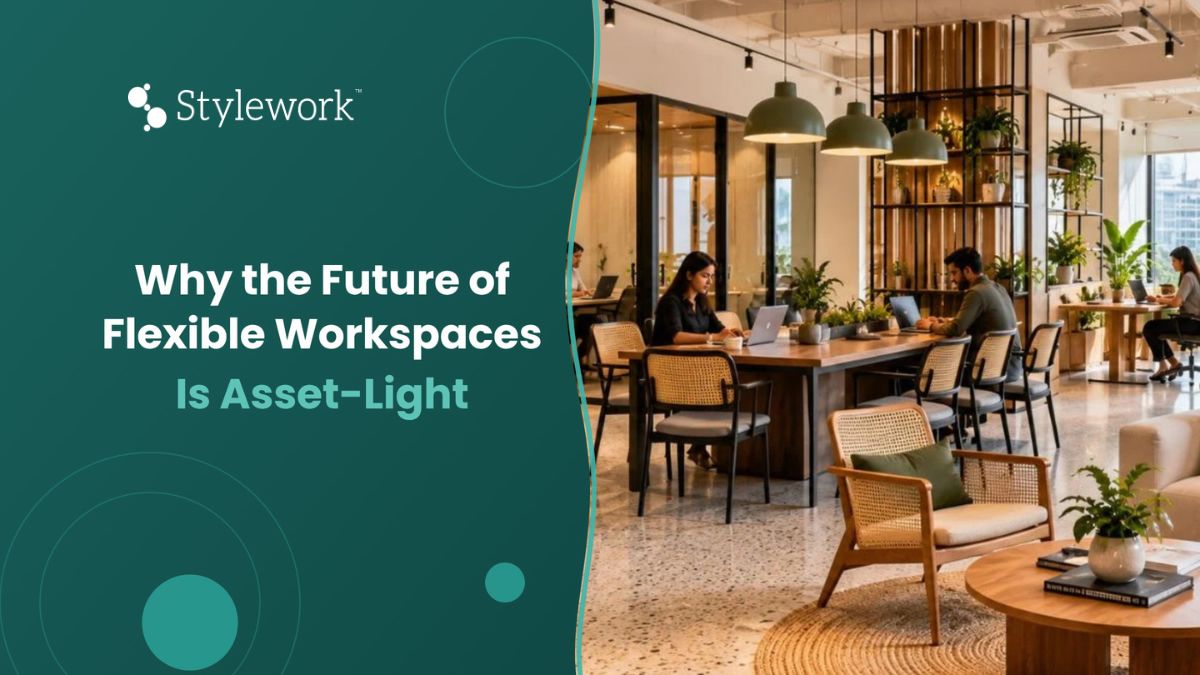
The way businesses use office spaces is changing. Companies no longer want to commit significant capital to fixed office infrastructure when their workforce, team sizes and workspace requirements can change quickly. At the same time, commercial property owners are looking for better ways to utilise their spaces and generate revenue.
This shift is creating opportunities for the asset-light flexible workspace model.
Instead of purchasing properties or taking on large, long-term lease commitments for every new centre, workspace operators can partner with property owners to manage and operate ready-to-use offices. These partnerships allow operators to expand their networks while helping property owners improve the utilisation of their commercial assets.
The shift is not just about changing how coworking spaces operate. It reflects a broader transformation in commercial real estate, where technology, operational expertise, customer experience and strategic partnerships are becoming increasingly important.
As India’s flexible workspace industry grows, the asset-light model could play a significant role in shaping its next phase.
What Is an Asset-Light Flexible Workspace Model?
An asset-light flexible workspace model is a business approach in which workspace operators manage and operate commercial properties without necessarily owning the underlying real estate or taking on substantial long-term lease commitments.
Under this model, operators partner with landlords, developers and commercial property owners through management agreements, revenue-sharing arrangements or other commercial partnerships.
The property owner provides the physical space, while the operator may manage:
- Workspace design and fit-outs, depending on the agreement
- Day-to-day centre operations
- Sales, marketing and customer acquisition
- Technology and workspace management systems
- Facility management and customer support
- Memberships and enterprise relationships
For example, a property owner may have an office floor that is not being fully utilised. Instead of independently developing and managing a coworking centre, the owner can partner with a flexible workspace operator.
The operator manages the workspace, attracts businesses and handles daily operations. Both parties receive financial benefits according to their agreed commercial arrangement.
In simple terms, the property owner provides the space, while the workspace operator brings the expertise, technology and customer network to make it commercially productive.
It is important to understand that asset-light does not mean asset-free. Operators may still invest in furniture, technology, branding, fit-outs and operations. The objective is to manage capital more efficiently and reduce dependence on property ownership or fixed lease commitments.
Why Is the Flexible Workspace Industry Moving Towards Asset-Light Operations?
The growing acceptance of flexible offices is changing the relationship between property owners, workspace operators and businesses.
Traditionally, many coworking operators expanded by leasing commercial properties, investing in infrastructure and generating revenue through desk rentals, memberships and office agreements.
Although this approach helped establish the industry, it also created financial responsibilities. Long-term leases, fit-out expenses, maintenance and fluctuating occupancy could affect profitability.
The asset-light model offers another way to expand.
Here are five important reasons behind this shift.
1. Growing Demand for Flexible Office Spaces
Businesses are rethinking how much office space they need and how long they should commit to it.
Startups may need a small office today but a larger one within a year. Enterprises may require additional seats for new projects, while companies entering a new city may prefer a ready-to-use office instead of setting up their own infrastructure.
This is encouraging demand for flexible office spaces, managed offices and coworking solutions.
According to Cushman & Wakefield, India’s flexible workspace inventory reached 88.7 million sq. ft. in H1 2026, accounting for approximately 10.5% of the country’s total office stock.
This indicates that flexible workspaces are becoming an established part of India’s commercial real estate market.
For operators, this creates an opportunity to serve growing demand through partnerships rather than relying entirely on traditional leasing arrangements.
2. Reducing Dependence on Long-Term Lease Commitments
Traditional leasing often requires operators to commit to a property for several years, even when customer demand is uncertain.
If occupancy takes longer than expected to increase, the operator may still need to pay rent, maintenance charges and other expenses.
An asset-light partnership can change this arrangement.
Depending on the agreement, the property owner and workspace operator may share revenue, operating responsibilities and commercial risks. This can reduce the operator’s exposure to fixed rental obligations.
Although it does not eliminate financial risk, it can create a more adaptable cost structure.
3. Faster Expansion Across Multiple Locations
Expanding into a new city requires more than finding an available commercial property. Operators need to understand local demand, identify suitable locations, establish infrastructure and attract customers.
A partnership-led model can make this process more manageable.
Instead of independently managing every aspect of property acquisition and development, operators can collaborate with property owners who already have suitable commercial spaces.
This creates opportunities to expand across established business districts and emerging commercial markets, provided there is sufficient demand.
4. Better Utilisation of Commercial Properties
Vacant or underutilised commercial spaces can affect property owners’ rental income and overall asset performance.
Flexible workspace partnerships offer another way to utilise these properties.
A professional operator can convert suitable commercial spaces into:
- Coworking offices
- Managed office spaces
- Private cabins
- Dedicated desks
- Meeting rooms
- Day-pass workspaces
Property owners can benefit from an experienced operator who understands workspace management, customer requirements and business operations.
5. Changing Enterprise Workspace Requirements
Large businesses are increasingly considering flexible offices as part of their real estate strategy.
Instead of relying entirely on traditional office leases, companies can combine permanent headquarters with managed offices and flexible workspace locations.
This approach is commonly known as a Core + Flex strategy.
For example, a company may maintain its primary office in Bengaluru while using managed workspaces in Hyderabad, Pune or Delhi-NCR to support regional teams.
This creates demand for operators that can provide consistent workplace experiences across multiple locations.
How Does the Asset-Light Workspace Model Work?
The asset-light approach generally involves three key participants: property owners, workspace operators and businesses using the workspace.
Here is how the arrangement works:
Step 1: Property owner provides the space
A landlord or developer identifies a suitable commercial property or office floor that can be converted into a flexible workspace.
Step 2: Operator enters a partnership
The workspace operator evaluates the location, market demand, infrastructure requirements and commercial feasibility before signing an agreement.
Step 3: Workspace is operationalised
Depending on the agreement, the parties coordinate fit-outs, furniture, internet connectivity, meeting rooms, access systems and other facilities.
Step 4: Operator manages customers and operations
The operator handles marketing, memberships, enterprise enquiries, facility operations and customer support.
Step 5: Revenue is generated
Businesses access the workspace through private offices, managed offices, coworking memberships, dedicated desks or meeting rooms.
Step 6: Both parties receive commercial benefits
Revenue, operating costs and responsibilities are distributed according to the agreed partnership structure.
This arrangement allows property owners to benefit from professional workspace management while operators can expand their network without necessarily owning the underlying property.
Asset-Light vs Traditional Leasing: What Is the Difference?
Both models have a role in the flexible workspace industry, but their financial and operational structures are different.
| Factor | Traditional Leasing | Asset-Light Partnership |
|---|---|---|
| Property ownership | Usually with landlord | Usually with landlord |
| Operator’s arrangement | Leases the property | Partners with the property owner |
| Rental commitment | Often fixed lease payments | May involve revenue sharing or management fees |
| Capital requirements | Can be substantial | Can be lower, depending on the agreement |
| Revenue structure | Operator earns workspace revenue and pays rent | Revenue or fees are shared as agreed |
| Financial risk | Significant lease-related exposure for operator | Risk can be distributed between partners |
| Expansion | Requires additional lease commitments | Can leverage multiple property partnerships |
| Operational control | Generally with operator | Defined through the partnership agreement |
Which model is better?
There is no universal answer. Traditional leasing may offer greater operational control, while asset-light partnerships can provide more flexibility and reduce fixed property-related commitments.
The right approach depends on location, investment requirements, property quality, occupancy potential and commercial terms.
Benefits of the Asset-Light Model for Operators and Property Owners
One of the biggest advantages of this approach is that it can create value for both sides of the partnership.
Benefits for Workspace Operators
1. Capital-efficient expansion: Operators can potentially enter new markets without purchasing properties or committing to large fixed rental obligations for every centre.
2. Greater operational focus: They can concentrate on customer acquisition, technology, workspace management and service quality.
3. Access to more locations: Partnerships can help operators build a wider network across different business districts and cities.
4. Greater business flexibility: Operators can plan expansion based on local demand and operational performance, subject to partnership terms.
Benefits for Property Owners
1. Better utilisation of vacant spaces: Property owners can convert suitable commercial properties into professionally managed flexible workspaces.
2. Access to operational expertise: They can work with operators that understand workspace management and enterprise requirements.
3. Additional revenue opportunities: Instead of relying only on conventional leasing, owners may participate in workspace-related revenue through suitable commercial arrangements.
4. Wider customer reach: Operators can bring existing corporate relationships, marketing capabilities and customer networks to the property.
However, an asset-light arrangement does not automatically guarantee higher returns. Actual performance depends on occupancy, pricing, operating expenses and the commercial agreement.
The Role of Technology in Asset-Light Flexible Workspaces
Technology is one of the most important factors supporting the growth of asset-light workspace operations.
Managing a single coworking centre is different from managing a network of workspaces across multiple cities. Operators need systems that provide visibility into bookings, occupancy, customer requirements, facility operations and revenue performance.
Some important technology requirements include:
- Workspace management systems: Manage memberships, seat allocations, meeting room reservations and daily operations.
- Occupancy analytics: Identify how different areas are being used and highlight underutilised spaces.
- Centralised booking systems: Help businesses and employees access workspaces across multiple locations.
- Customer relationship management: Manage enquiries, corporate accounts, communication and renewals.
- Access management: Support secure entry, visitor management and employee access.
- Reporting and analytics: Help operators and property owners understand occupancy trends and operational performance.
Technology also plays an important role in enterprise workspace management.
Platforms such as Stylework’s FlexBoard support organisations in managing workspace bookings, seat utilisation, room reservations and workplace operations through a centralised system.
As flexible workspace networks expand, technology will become increasingly important for maintaining consistency, improving utilisation and managing operations across locations.
What Are the Challenges of an Asset-Light Workspace Model?
Although the asset-light approach offers several advantages, it is not without challenges. A successful partnership requires more than an agreement between a property owner and an operator.
1. Maintaining Consistent Service Quality
Managing multiple workspaces across different properties can make it difficult to maintain the same service standards.
Differences in building infrastructure, facility management and local teams may affect the customer experience. Operators need standard processes and regular performance monitoring.
2. Managing Partner Relationships
Both parties must clearly understand their responsibilities regarding maintenance, fit-outs, operating expenses, revenue sharing, customer complaints and property upgrades.
Unclear agreements can create operational conflicts.
3. Occupancy and Revenue Uncertainty
Workspace revenue depends on demand, pricing, customer retention and occupancy.
A location with low demand may not generate enough revenue to cover operating expenses or meet the expectations of both partners. This makes location selection and market research essential.
4. Protecting Long-Term Profitability
Lower fixed property commitments do not automatically translate into higher profits.
Operators still need to manage staffing, marketing, technology, facility operations and customer acquisition. The business model must generate enough revenue to support these expenses while delivering value to the property owner.
What Does the Future of Asset-Light Flexible Workspaces Look Like in India?
India’s flexible workspace industry is moving beyond its earlier association with freelancers and small startups.
Large enterprises, multinational companies, Global Capability Centres (GCCs) and growing businesses are increasingly considering managed and flexible office solutions.
According to Cushman & Wakefield, flexible workspace operators leased 44.1 million sq. ft. between 2023 and 2025, representing more than 720,000 seats.
This growth points towards a larger role for flexible workspaces in India’s commercial real estate ecosystem.
Five trends are likely to influence the next phase.
1. More Landlord and Operator Partnerships
Property owners may increasingly explore management agreements and revenue-sharing arrangements as alternative ways to utilise commercial properties.
This creates opportunities for operators with strong operational expertise and established customer networks.
2. Growing Demand for Managed Offices
Large organisations require more than shared desks and meeting rooms. They often need dedicated floors, private offices, customised infrastructure, access controls and enterprise-grade services.
Managed offices can meet these requirements while offering greater flexibility than independently setting up every office.
3. Expansion Beyond Major Business Districts
As companies distribute their workforce across different locations, demand for professional workspaces may increase in suburban business districts and emerging cities.
Operators can explore these markets through partnerships, provided locations have sufficient business demand and suitable infrastructure.
4. Greater Focus on Data-Driven Workspace Management
Occupancy data, booking patterns, employee utilisation and operational reporting will influence how workspaces are designed and managed.
Operators that use technology effectively can make better decisions about capacity, pricing and resource allocation.
5. Workplace Experience Will Matter More
Businesses are not simply looking for desks and office furniture. They expect reliable infrastructure, professional facilities, comfortable environments, meeting spaces and responsive support.
Operators that combine operational efficiency with a positive workplace experience are likely to build stronger customer relationships.
Is the Asset-Light Model the Future of Flexible Workspaces?
The asset-light model is not a replacement for every traditional leasing arrangement. Instead, it offers another way for the flexible workspace industry to grow.
Traditional leasing can still make sense for operators that want greater control over their centres and have the financial capacity to manage long-term commitments.
However, partnership-led models offer an alternative for businesses looking to expand their workspace networks with more capital-efficient structures.
For property owners, they create opportunities to improve the utilisation of commercial spaces. For operators, they can open access to more locations while allowing greater focus on technology, customer experience and operational excellence.
Ultimately, the future of flexible workspaces will not be determined by how many properties an operator owns or leases. It will depend on how effectively they manage spaces, build partnerships, understand customer requirements and deliver consistent workplace experiences.
The next phase of flexible workspace growth will be shaped not just by the spaces operators manage, but by the strength of the partnerships, technology and services behind them.